
Training Program for Ritual Slaughterers and Inspectors
Applications Are Now Open for
Treifot & Behamot, Fall 2026
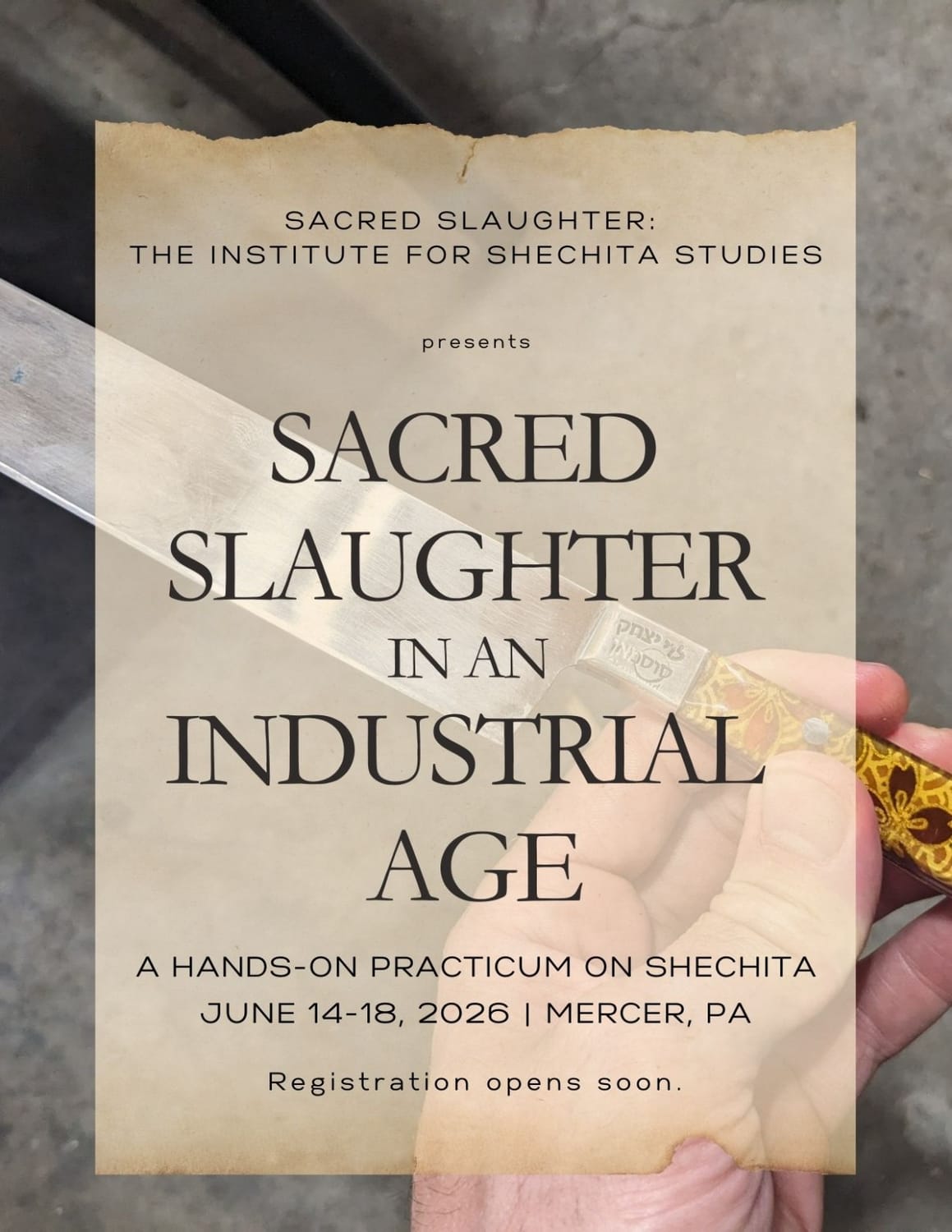
Applications are now open for our next Shechitah Practicum with the Sacred Slaughter Institute, led by Rabbi Shlomo Zacharow.
This cohort will study the laws of treifot — the physical defects and injuries that render an animal non-kosher. Spaces are limited; apply early to reserve your place.
(שו"ב - Shochatim u-Vodkim)
A Comprehensive Two-Year Certification in Shechita (Kosher Slaughter)
Whether you're pursuing shechita certification as a שו"ב (Shochet u-Vodek), expanding your Judaic learning, or exploring a profound and often misunderstood tradition, this immersive program offers rigorous study and hands-on experience in the ancient practice of shechita.
Year 1: Shechita of Fowl (עופות)
Academic Curriculum
Deep dive into the halachot (Jewish laws) of shechita for fowl
Weekly 90-minute classes from Elul (September) to Iyyar (May)
Classes are hybrid: join live or watch recorded sessions on Zoom
Students study materials in advance, ideally in hevrutot (study pairs)
Course materials include:
Volume I of Beit David by David Kamin (Revised by Chaim Yosef Waldman).
Source sheets provided throughout the course.
All texts are studied in original Rabbinic Hebrew/Aramaic.
English translations available after each class.
Includes two written examinations
A detailed syllabus is provided before the course begins
Practical Training
Knife preparation, checking, and repair
Hands-on shechita of chickens and other fowl
Checking for treifot (non-kosher conditions)
Kashering techniques: soaking and salting
Students in begin knife work in the fall and slaughter practice in winter/spring
Students participate in regional and national workshops and seminars
Certification
Certification (kabbalah) granted upon:
Passing written exams.
Passing the “knife test”
Successfully slaughtering three consecutive fowl (though students will practice on many more)
Price
We offer a sliding scale to keep this training accessible:
$2197 as the standard tuition
$1997 for students or those without steady income
$2397 for those who are able to help others access this sacred learning through tzedakah
Students can pay in full or in 2 installments, the first due upon enrollment
Beyond tuition, students are responsible for the following costs:
Book and printed materials
Knife (13cm / 5 inches, approx. $140)
Sharpening stones (approx. $250)
Year 2: Treifot & Large Animals (בהמות)
Academic Curriculum
Focus on treifot (defects rendering animals non-kosher) in kosher mammals (sheep, goats, cows)
Structure mirrors Year 1, with three written exams
Enhanced use of visual aids: images, diagrams, and videosPrimary texts:
Volumes II & III of Beit David
Supplementary source sheets
Practical Training
Handling and shechita of sheep, goats, and cows
In-depth anatomical knowledge of the respiratory and digestive systems
Extensive training in identifying treifot—especially in lungs
Students begin knife work in the fall and slaughter practice in winter/spring
Students participate in regional and national workshops and seminars
Certification
Certification (kabbalah) granted upon:
Passing all written exams
Successfully slaughtering three consecutive animals.
Demonstrating expert-level proficiency in identifying treifot.
Price
$2197 as the standard tuition
$1997 for students or those without steady income
$2397 for those who are able to help others access this sacred learning through tzedakah
Beyond tuition, students are responsible for the following costs:
Knife(s):
For behamot dakkot (sheep/goats): 25cm / 10 inches (~$330)
For behamot gassot (cows): 42cm / 16.5 inches
Animals used in practicum
Additional Notes
Year 1 can be taken independently, allowing for certification in shechita of fowl.
Students may begin with Year 2, but must subsequently complete Year 1 to be fully certified.
Questions? Please feel free to contact R. Zacharow.